This analysis follows the official Extended Look and its recorded scene details. Each section explains the moment in writing; the timestamp afterwards opens the corresponding passage for comparison.
SAN4SAN is named on the opening interaction
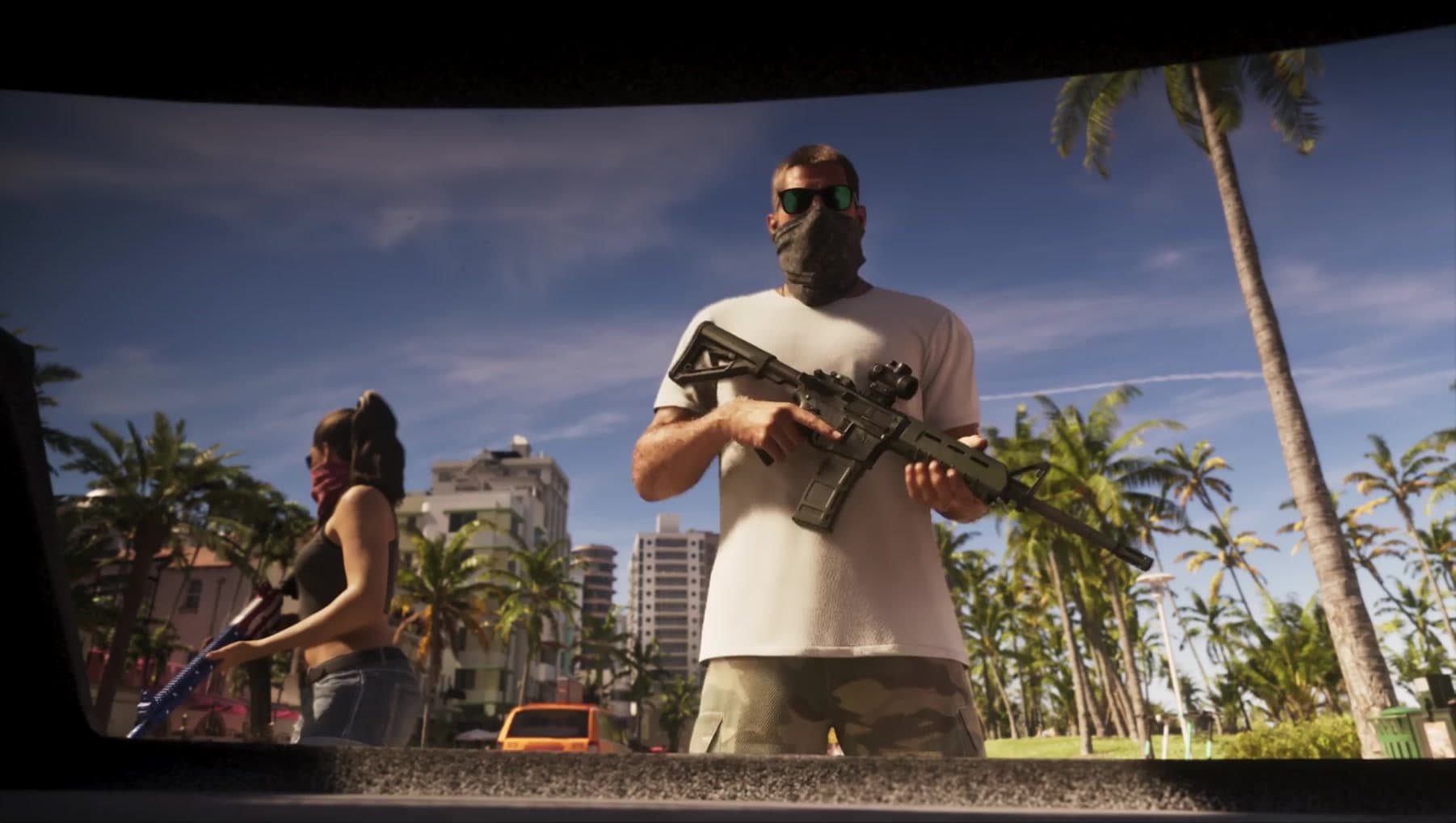
The lower-right target label reads SAN4SAN; a separate question asks about Raymond. Dialogue says the pair are collecting for Boobie.
SAN4SAN is the lower-right target label during the opening encounter. A separate question refers to Raymond, while dialogue says the pair are collecting for Boobie. Those names occupy different roles in the passage: the targeted person, the person being asked about and the person associated with the collection. Keeping them separate avoids turning the lift companion into Boobie without evidence.
Dialogue identifies Ernesto before he warns Raymond that people from the task force are coming. The phone screen still labels the call Unknown.
The phone labels the caller Unknown, but the conversation identifies Ernesto before his warning about the task force. Reading only the screen would miss information supplied by the dialogue. His warning changes the scene from a collection visit into an urgent threat to the people inside. The task-force claim belongs to Ernesto’s speech; his full position and how he learned the information are not established simply by the caller label.
Dialogue names Méndez and the pair worry that he may have seen them.
During the escape, the dialogue names Méndez and the pair worry that he may have seen them. The concern makes recognition itself part of the scene: being noticed by this particular person matters to the characters. It gives the audience a question about their existing connections without answering it. The passage does not supply Méndez’s full role or prove that Jason has a hidden professional identity.
The escape enters Aunt Tee’s home; dialogue shifts to her anger about the intrusion and window air conditioner.
The escape interrupts Aunt Tee’s home, shifting the immediate conversation from the armed operation to her anger about the intrusion and the window air conditioner. That change in tone gives the building civilian life beyond the mission’s central conflict. It is also a reminder that the route passes through somebody’s living space. The familiar form of address does not by itself establish that she is a biological relative of either lead.
The interface identifies HAMMER LADY and offers a QUESTION action outside a motel.
The interface uses HAMMER LADY as the target label. That gives the audience a specific way to identify the person in this encounter, but it reads as a descriptive label rather than a verified full name. It is useful in a scene guide because readers can match it to what is on screen. A personal history or future story role cannot be inferred from the label alone.
Raul’s intelligence background is presented as hearsay
The conversation describes Raul as Brian’s old cellmate. His possible former Dominican intelligence background is attributed uncertainly to Cal.
The conversation describes Raul as Brian’s old cellmate, then introduces the possibility of a former Dominican intelligence connection through an uncertain recollection attributed to Cal. The distinction is important to the character profile: a speaker repeating something they have heard is different from an official biography. The exchange establishes what the characters believe or have been told about Raul, leaving room for that information to be incomplete or wrong.
The airport organiser is addressed as Val and Tina
Jason addresses the organiser as Val; Andrés later addresses her as Tina. Lucia is the dark-suited woman beside Jason.
The airfield conversation uses two forms of address for the organiser: Jason says Val and Andrés later says Tina. Lucia is the dark-suited woman beside Jason, so those forms should not be used to merge her with the organiser. The exchange establishes the organiser’s involvement in arranging the protection job. It does not provide enough information to build a full name from the two forms or identify her as a member of another named group.
The brief identifies Andrés and asks the pair to protect him while managing his behaviour. His introduction follows at the private jet.
The briefing names Andrés de León and asks Jason and Lucia to protect him while managing his behaviour. His arrival by private jet follows, connecting the assignment to the person they are meeting. This gives the later party and raid an initial purpose: the pair are there on a protection job. The introduction does not establish every aspect of Andrés’s public career or justify assigning him a particular real-world celebrity counterpart.
The introduction explicitly names Petra Navarro and her executive role.
The introduction identifies Petra Navarro as Megamundo’s chief operating officer. Her executive role gives her presence at the event a corporate context, rather than leaving her as an unnamed host in a party scene. The title also connects her to the headquarters opening described later in the speech. It establishes her position in the company, without revealing her wider allegiances or how she fits into the complete plot.
Lucia is introduced to a man named Gustavo as part of the new security detail.
Lucia is introduced to Gustavo in connection with the new security detail during the party passage. The spoken name gives readers another person to distinguish within a crowded sequence of introductions. The scene provides that immediate context, but it does not establish a surname or confirm that a later masked or disguised person is the same man. Those identifications need more than proximity in an edited reveal.
The phone displays Unknown with an elapsed-call readout beneath it and a red hang-up control.
The number beneath Unknown belongs to the ongoing call display, with the red hang-up control below. It should be read as elapsed call time, not a clock showing when the mission takes place. That distinction prevents a small interface detail from becoming a false chronology clue. The important story information comes from what the participants say, while the screen shows that the conversation is still in progress.
They discuss whether to share their troubles, the risk of betrayal and whether Raul could be a cop.
Jason and Lucia’s disagreement gives Raul’s name an immediate role in their relationship. The scene is concerned with whether he can be trusted, rather than merely introducing another contact. Placed beside the uncertain account of his background, the disagreement gives the audience reasons to pay attention to him. It still does not settle which character is right or reveal a later betrayal.
A defender calls for an asset to be protected as people are moved away from the raid.
As the attack begins, a defender calls for an asset to be protected while people are moved away from danger. The language suggests that the response has a particular priority within the wider panic. It gives the audience a question about who or what is most important to the defenders. The line alone does not identify that asset or connect the attackers to a named employer.
Brian recalls a dangerous carousel ride, escaping it and losing his friend Jimmy Canto. His point to Jason is about recognising when to leave.
Brian’s account of a childhood carousel incident becomes a warning in the conversation. The passage moves from a remembered event to a way of thinking about the risks around the characters now. Our reading is that it contributes to the reveal’s theme of consequences arriving after apparent freedom or good fortune. That thematic connection does not reveal the ending or establish which character will suffer a particular fate.
These are separate story clues in an edited presentation. Attribute warnings and suspicions to the speakers; Brian’s story does not establish an ending or a future death.
What this tells us
The reveal identifies people in several ways: target labels, direct introductions and conversation about absent contacts. Keeping those sources distinct prevents a descriptive nickname or uncertain recollection from turning into a full biography. This register identifies characters in the scenes; it does not establish the performers who voice them.
SixCentral is an independent fan resource and is not affiliated with Rockstar Games or Take-Two Interactive. Sources and interpretation are identified in our coverage. Official game imagery is credited to its owner; SixCentral branding is original. This page may contain affiliate links.